Oliver Wolfs
Sponsor hospitality sounds like the easy part of the job. You're hosting people, building relationships, making partners feel valued in your stadium. Then matchweek arrives — and suddenly it is your entire job.
A typical First Division club spends more than 30 person-weeks per season on hospitality coordination alone. Two staff members. Every matchweek. Over a 17-game season, that's over €45,000 in coordination labour — for admin that should take minutes.
This guide walks through how to get sponsor hospitality under control — without hiring more people. We cover everything from pre-season planning to matchday dashboards and automated post-match reports. By the end, you'll have a system that runs the season, not just the next match.
Before fixing the system, it helps to understand the full scope of what you're managing. Sponsor hospitality covers every contracted benefit tied to the matchday experience. This means VIP lounge access, boxes, table allocations, catering, parking, and ticket packages. Each partner has a different combination across different matches.
For a club with 30 hospitality partners across a 17-game home season, that's 510 individual hospitality touchpoints per season. Every one of them needs coordination — invitation, confirmation, check-in, delivery, and report. That's the actual job, and it's why matchweek feels like a second job on top of the first one.
Add the communication layer — invitations, reminders, confirmations, changes, dietary requirements, check-in lists — and complexity multiplies fast. A club with 30 partners running 17 home matches manages hundreds of individual interactions per season. Most happen in the week before the match, when the rest of matchweek pressure is also at its peak.
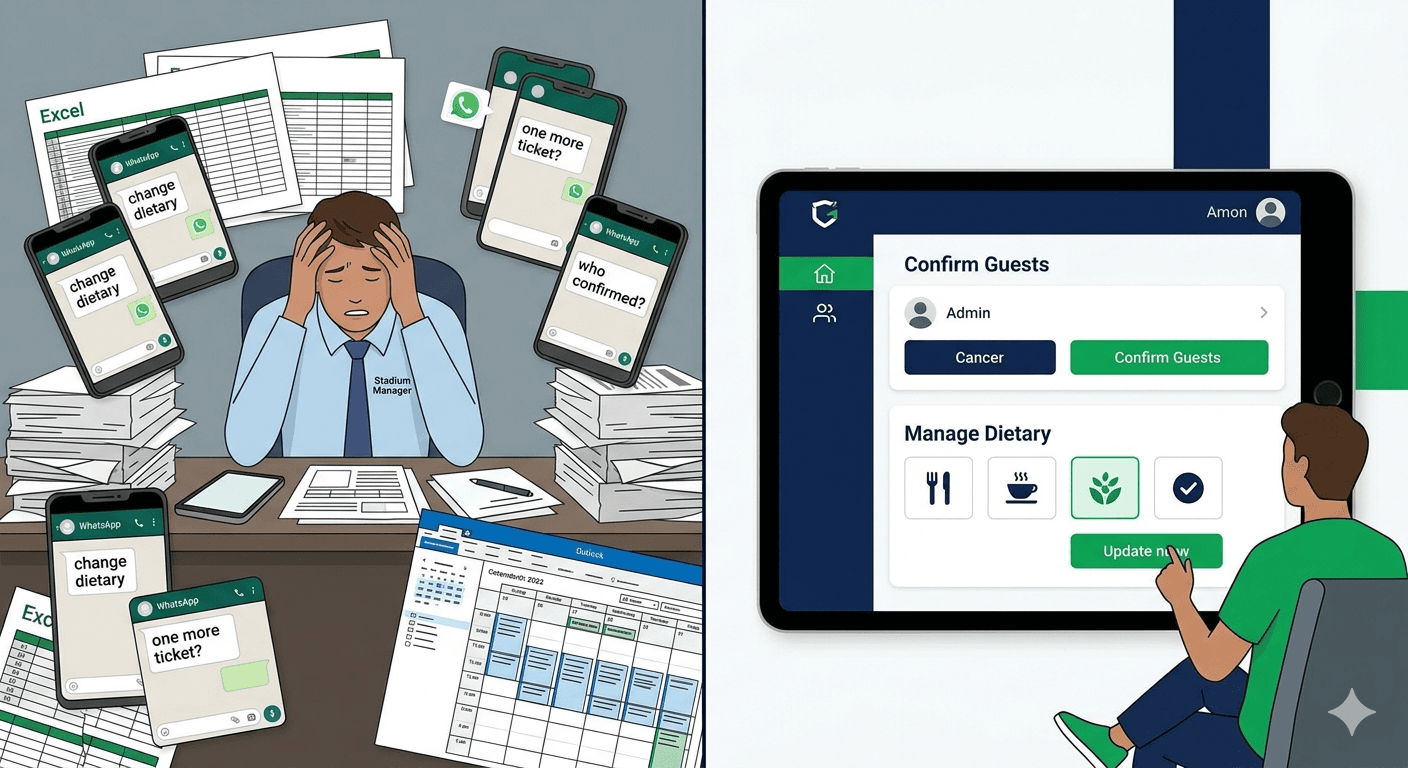
Most clubs manage hospitality with a combination of Excel, Outlook, and WhatsApp. These tools work for a single event. They collapse under the weight of a professional football season.
Excel can't send invitations or track confirmations. WhatsApp doesn't produce post-match delivery reports. So the team fills the gaps manually — every match, across multiple systems.
The result is a system that technically works, but barely. It depends entirely on one or two people who know where everything lives. When they're sick, on holiday, or leave the club, the knowledge walks out with them.
The first step isn't buying software. It's understanding exactly what you've committed to. Pull every active contract and extract every contracted hospitality right. Who gets which box, how many seats, for which matches, with which catering and parking? List it all in one place before the season starts.
Not all hospitality rights are the same tier or volume. Some partners have season-long lounge access; others have selected-match packages at different catering levels. Knowing exactly what each partner holds — before the first ball is kicked — prevents disputes all season.
Then compare that inventory against your actual matchday capacity. Conflicts between what was sold and what's available are better discovered in July than on matchday. A sold-out box discovered at 5pm on a Friday is a crisis; the same discovery in August is a conversation.
This hospitality register becomes your single source of truth for the season. Every invitation, every confirmation, and every delivery report traces back to it. Start here and everything else becomes manageable.
WhatsApp and spreadsheets work for two people coordinating one game. They don't work for 50 partners across a 17-game season. Requests get buried, dietary notes vanish, and nothing is auditable at renewal time.
The alternative doesn't have to be expensive software. A shared inbox with clear protocols — or a structured form tool — is already better than WhatsApp. At minimum, every partner request should create a timestamped record — something you can search and export.
What you really need is a system where partners update their own information directly. Guest names, changes, dietary requirements — all in one place, all time-stamped. The club stops being the middleman, and accuracy improves because partners know their own guests best.
There's a secondary benefit to a proper record system. When every request has a timestamp, renewal conversations are grounded in documentation rather than recollection. "You sent two additional seat requests across three matches" is a more productive conversation than working from memory.
Most clubs send hospitality invitations manually before every match. Someone pulls the partner list, drafts the email, fills in the seat details, and sends it. For 30 partners, that's a meaningful block of time — done twice a month, every month, for an entire season.
The better approach is a system that sends personalised invitations automatically before every home game. Each partner receives an email with their specific allocation, a booking link, and a confirmation deadline. Nobody on your team has to touch it. A well-designed invitation does more than notify — it shows exact allocations, names the match, sets a deadline, and links directly to the guest management portal.
Reminders go out automatically too — for partners who haven't confirmed — without anyone chasing. If manual invitations take two hours per match, automation returns 34+ hours across a 17-game season. That's a full working week back in the team's hands.
The most time-consuming part of hospitality management isn't sending invitations. It's collecting what comes back. Partners confirm by email, add guests by WhatsApp, and send dietary updates on Thursday night. By matchday, the list has changed five times across three channels. No one is completely sure which version is current.
A self-serve guest portal solves this at the source. Each partner logs in and manages their own guests — adding names, confirming attendance, noting dietary requirements. When matchday arrives, the list is accurate because the partner just confirmed it.
Partners who are new to self-serve adopt it quickly when the interface is simple. They control their own guest list, see their allocation, and update plans without emailing your team. Most find it faster than the old process.
Dietary requirements are the most error-prone part of hospitality coordination. A guest has a severe nut allergy. That information needs to reach catering — not stay buried in a WhatsApp thread from three days ago.
When guests confirm digitally, dietary requirements are captured in the same step. Name, company, table, and dietary need all go into one record. Catering gets a clean report before the match — nothing chased separately. The catering report should be formatted for the kitchen — not a raw data export. That means each requirement labelled with table number and name, in a format the catering team can action directly.
The stakes here are higher than most clubs realise. A dietary error at a VIP event can end a sponsor relationship. Getting dietary data into the confirmation flow — not as an afterthought — removes that risk entirely.
On matchday, most clubs work from a spreadsheet last updated the evening before. A partner calls at 2pm with a late addition. Someone updates the list — but catering is set and front-of-house may not hear in time.
A real-time matchday dashboard shows every partner, every table, every confirmed guest — live, as of right now. When a guest cancels at noon, the dashboard updates instantly — catering sees the change without a phone call. Nothing gets missed because someone is working from an old file.
Digital check-in — a tablet or app at the entrance — captures accurate attendance as it happens. That data feeds directly into the post-match delivery report. No manual assembly required.
Every sponsor who used their hospitality entitlement deserves a report the morning after. Most clubs don't send one — or send a brief email three days later, when the momentum is gone.
A good post-match report covers who attended, which rights were delivered, and what the sponsor received. If check-in was handled digitally, this generates automatically — ready the next morning. No manual assembly. There's also a compliance angle — more partners, especially corporate ones, are asking for documented proof of delivery as a condition of renewal.
Every sponsor who gets a post-match report enters renewal season with documented evidence of what they received. You're not asking them to remember the value — you're showing it to them. That changes the renewal conversation entirely.
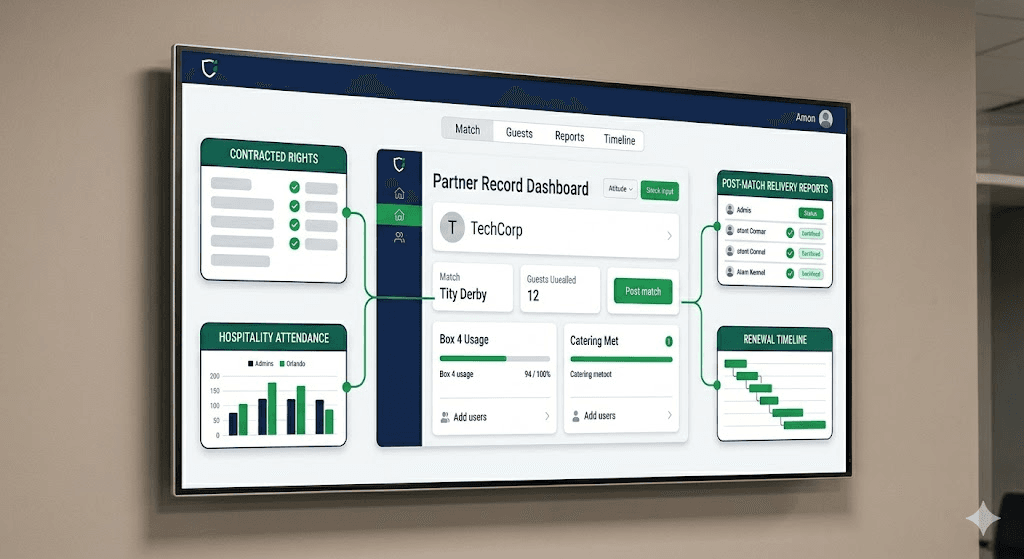
Hospitality often lives in its own silo — disconnected from the CRM, the rights tracker, and the renewal conversation. When a sponsor calls to discuss their deal, the hospitality record isn't in front of you. You're working across three systems.
When hospitality is part of your commercial platform, everything lives in one place. The partner record shows contracted rights, confirmation status, attendance history, delivery notes, contract, and renewal timeline. You walk into every conversation with the full picture.
At renewal, you open one record and see everything: what was contracted, what was delivered, who attended which matches. That's the version of the conversation that wins renewals. It only happens when the data is connected — not scattered across four tools and someone's memory.
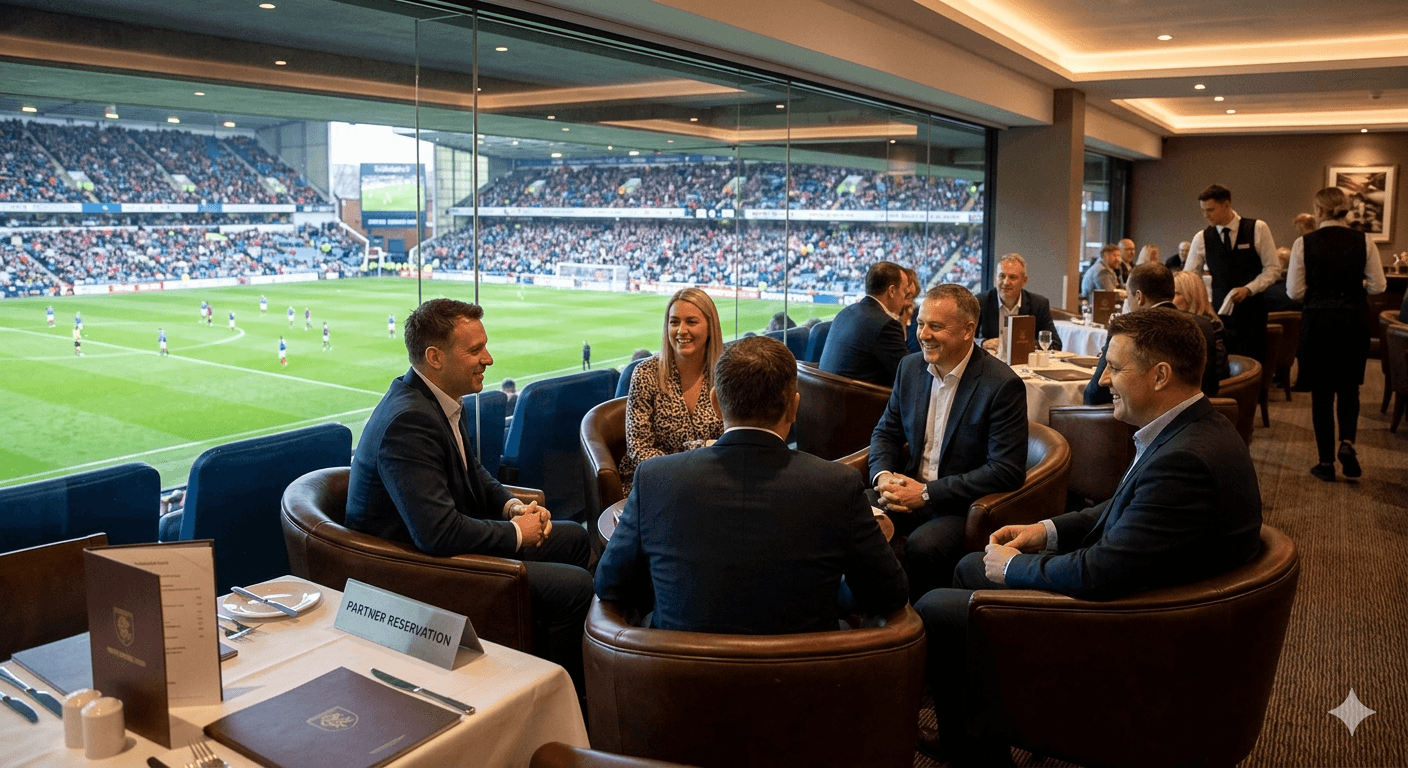
Generic event management tools weren't built for this problem. They handle one-off events — conferences, product launches, galas. Sports hospitality is a repeating obligation — same partners, different guests, contracted rights, every fortnight.
The right platform covers the full cycle: invitations, self-serve guest lists, dietary capture, check-in, and post-match reports. It should connect directly to your CRM so hospitality lives inside the partner record. And it should understand a sports season — not need rebuilding for each match.
wehave's Enterprise plan is the only option in this price range that handles sports hospitality end-to-end. It covers per-partner seat allocations, digital invitations, self-serve guest portals, matchday dashboard, check-in, and automatic post-match reports. No other platform at this price point covers this completely.
30-minute demo. We show you your setup, not a generic tour.
Book a demo →Sponsor hospitality doesn't have to consume your matchweek. The chaos comes from bad tooling and unclear process — not from the work itself. Fix the process and it largely runs on its own.
Start with a complete pre-season inventory, then automate invitations and let partners self-serve their guest lists. Build a real-time matchday dashboard and let the post-match reports generate themselves from check-in data. Connect everything to your CRM so renewal conversations start from evidence, not memory.
wehave handles the full hospitality cycle in one platform — invitations, guest management, check-in, and post-match reports. If you're spending two staff members every matchweek on logistics, the maths are clear. Start for free or book a demo at wehave.io.
How much time does hospitality coordination actually take at a professional sports club?
More than most people expect. A typical First Division club loses over 30 person-weeks per season — that's €45,000+ in coordination labour. Every match triggers the same cycle of invitations, confirmations, updates, and post-match reporting. The number is high because it compounds: each match runs the same full cycle, and with 17 home matches, that's 17 iterations.
Can partners really manage their own guest lists without making errors?
Yes — and most prefer it. A self-serve portal lets partners update guest lists, add dietary requirements, and confirm attendance without any prompting. Partners know their own guests better than your team does — and every change is time-stamped. Adoption is usually faster than clubs expect. Once a partner realises they can update the guest list from their phone at midnight, they prefer self-serve.
What should a post-match hospitality delivery report include?
At minimum: who attended, which rights were delivered, and any items outstanding. Include the club's branding — it's a sponsor touchpoint, not an internal memo. Deliver it the morning after the match, and it builds the renewal case before the formal conversation even starts. The speed matters as much as the content.
How do you handle last-minute guest changes on matchday?
This is where a real-time dashboard earns its keep. A guest cancels at noon — the dashboard updates instantly, catering sees the change without a phone call. With a live dashboard, late changes aren't emergencies — they're just updates. The whole matchday operation runs from one source, and everyone's working from the same version.
What's the difference between event management tools and sports hospitality software?
Event management tools are built for one-off events with a fixed guest list. Sports hospitality is a repeating obligation — the same partners, different guests, contracted rights, every fortnight. You need a system that tracks rights from the start of the season and remembers the full delivery history. Event tools don't know what your partner is owed — you have to tell them every time.
How many staff do you need to run sponsor hospitality properly?
That depends entirely on your tooling. With manual coordination — WhatsApp, email, spreadsheets — two people is barely enough for 20+ partners. With the right system, one person handles the same volume and spends the time saved on relationships instead of logistics. The goal isn't to reduce headcount — it's to redirect time from admin toward relationship-building, upsell opportunities, and renewal preparation.
wehave gives commercial teams everything they need - CRM, live inventory, partner portals, hospitality, and AI - in one place.
Get wehave free →